
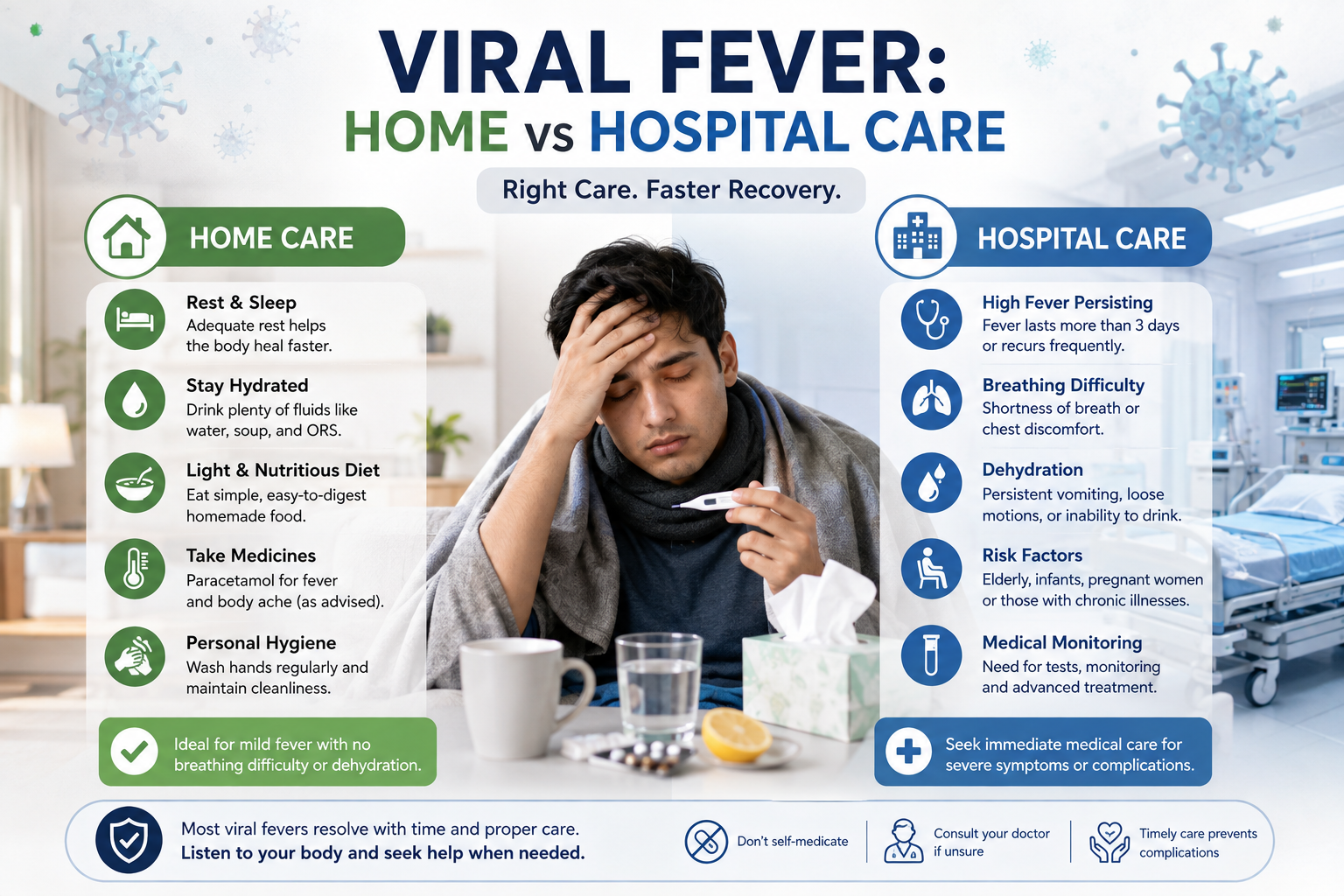
Most viral fevers improve with supportive care, but some illnesses can become serious. The key is not simply the number on the thermometer; hydration, breathing, alertness, pain, underlying health and the overall pattern of symptoms matter.
Home care for mild illness
Rest, adequate fluids and light meals can help when appetite is reduced. Fever medicines may be used when appropriate for the individual, but dosing should follow medical advice and age or weight. Antibiotics do not treat viral infections unless a clinician identifies a bacterial infection as well.
Watch hydration
Dark urine, very little urine, dizziness, dry mouth or unusual weakness can suggest dehydration. Children and older adults may become dehydrated more quickly.
When hospital care may be needed
Breathing difficulty, persistent vomiting, confusion, severe weakness, low oxygen levels, dehydration, severe pain or worsening symptoms can require medical assessment. People with significant chronic diseases or reduced immunity may also need a lower threshold for review.
Avoid self-medication traps
Taking multiple combination cold medicines can accidentally duplicate ingredients. Avoid unverified steroid or antibiotic use. If symptoms persist or worsen beyond the expected course, seek professional assessment.
When to seek medical help?
Go to emergency care for severe breathing difficulty, blue lips, confusion, seizures, fainting, severe dehydration, chest pain, coughing blood or rapidly worsening illness.
Medical note: This article is for general health education and does not replace an examination, diagnosis or personalised medical advice. Treatment decisions should be made with a qualified healthcare professional.
You might also like

Mar 30, 2026
NICU Success Stories

Mar 18, 2026
Importance of Full Body Checkups

Mar 11, 2026